
Hello my fellow Frankenstein fans,
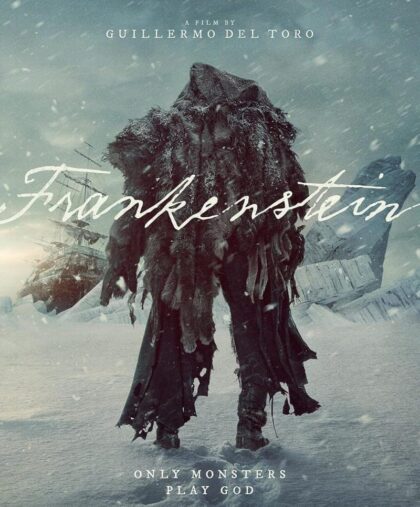
I am here to review the exciting new 2025 version of Mary Shelley‘s classic novel. I remember reading Mary Shelley’s book in high school a long time ago, and I recall how incredible it was that an 18-year-old woman could write such an outstanding piece of literature. Over the years, there have been many different interpretations of Frankenstein, from the original with Boris Karloff to Frankenweenie by Tim Burton and, of course, The Rocky Horror Picture Show, which is similar, but none of them truly captured what del Toro’s version has. I am excited that Netflix decided to give this a limited theater release because this is the kind of film and the kind of work del Toro creates that you really need to see on a big screen.
When I first heard that Guillermo del Toro was making his version of Frankenstein, I was ecstatic. Knowing his love for gothic horror, monsters, and source material, I knew this movie would be in excellent hands. When the teaser trailer dropped on Netflix, I watched it at least ten times straight because of the stunning visuals and the sheer excitement I felt knowing this incredible filmmaker was bringing his take on Frankenstein to the screen. I know he wanted to make this film for most of his career, and I was thrilled he finally got the chance. My anticipation for the film was palpable. I told everyone and anyone to watch the trailer, and I was so incredibly excited for the theatrical release. But I also worried because it was a limited release, and I feared my city might not get it in theaters. Luckily, it did, and I was able to see it with an audience in a theater. With all the streaming platforms we have today, and with Frankenstein currently on Netflix, there is no substitute for experiencing a movie in the theater. That is where you genuinely feel the breadth, depth, and power of cinema—where you can sense what the filmmaker really intended, especially with a cinematic architect like del Toro in the director’s chair.

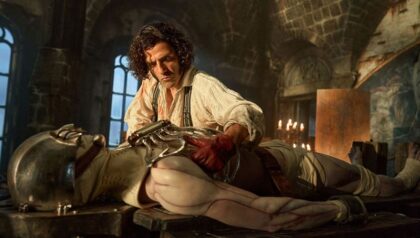
I was fortunate enough to see this masterpiece on a large screen, and from the opening scene to the closing scene, I was in complete and utter awe. del Toro is a master craftsman. He has such a passion for practical effects that there is remarkably little CGI used in this film, which is one of the reasons I admire him so much as a director. I also appreciate that he adapted some parts of Mary Shelley’s novel while remaining true to the story’s core. He made it more about fathers and sons, then the creature, then the original text. del Toro has such a deep love for the novel and its source material that I knew only he could do justice to that incredible story.
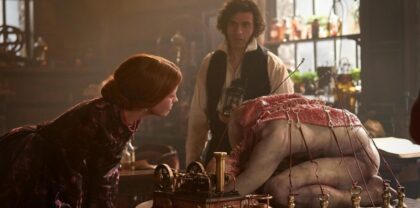
The cast in this film is top-notch, including Oscar Isaac, Mia Goth, Jacob Elordi, and Christoph Waltz. This ensemble is excellent; everyone was perfectly cast. Oscar delivered a phenomenal performance, portraying what Victor Frankenstein had become under his father’s influence, played by Charles Dance. The movie truly focuses on fathers and sons, and the sins each bears that the other must live with and endure. del Toro added his “Mexican flair,” as he calls it, to his adaptations of Mary Shelley’s novel. Through his script, he introduced a more religious overtone.

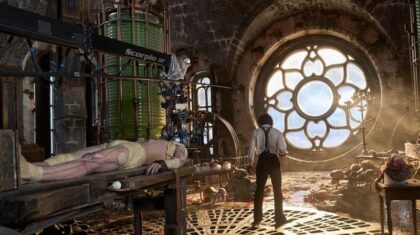
The visuals in this film are breathtaking, especially coming from someone like me, an amateur photographer. The use of visuals, color, and color coding in this film is awe-inspiring. I had a visceral reaction while watching because of the colors he uses, but that is not surprising since every Guillermo film features a specific color scheme or theme. He employs color so intentionally and with purpose. The film isn’t in black and white, and with Tamara Deverell‘s gothic and dark production design, any color really stands out tenfold. The film begins with three softer tones: white, blue, and gold. These choices mirror the story’s themes. When Victor is introduced, his childhood memories are associated with black, white, and red—red symbolizing the mother, which continues with him and only him, and the creature’s blood. Green appears with Mia Goth’s character, Elizabeth, representing nature, like the batteries in the lab when they’re turned off. Blue corresponds to Harlander, William, and Victor’s childhood, depicted in blue hues. When we see the creature, the camera work and color highlighting shift to earthy golds, transforming the film into a pastoral fairy tale.


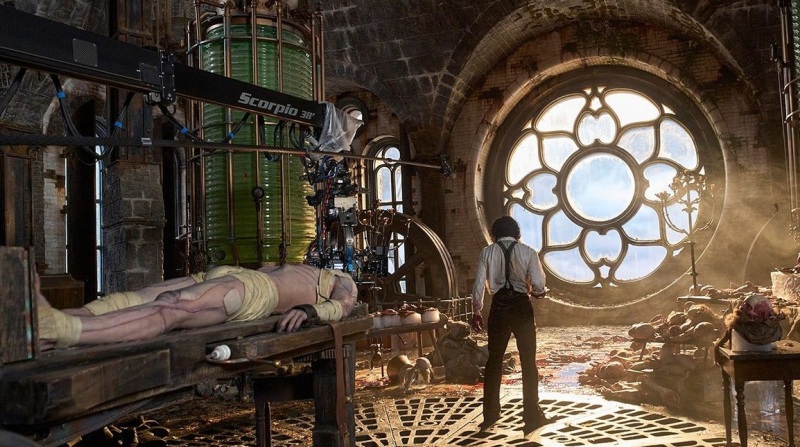
The set design and art direction surpass expectations for anyone who absolutely loves Gothic horror, especially given Guillermo’s prolific use of that style. The film truly showcases his unique touch, from the grand staircase in his castle to the scene with Oscar Isaac as Victor Frankenstein walking up the stairs with a lit candelabra. It was stunning—from the face in the stone walls to the highly detailed and well-constructed laboratory, which clearly employed practical effects. I applaud every technician involved in the art direction (Brandt Gordon, Celestria Kimmins, and Emer O’Sullivan), costumes (Kate Hawley), production design, set decoration (Shane Vieau), and cinematography (Dan Laustsen); they are all masters of their craft. I am so glad they had the opportunity to display their extraordinary talent in this film. I am confident that these artisans won’t just be nominated but will likely win an Oscar because there’s nothing I’ve seen that even compares.


The father-and-son theme runs throughout this film. It is evident in the relationship between Leopold Frankenstein, his son Victor, and William. Victor discusses his father’s disdain for him and his mother because they were not of fair skin. He mentions that Leopold favored Victor’s younger brother, William, because he thought William looked more like his father. Of course, this influenced everything Victor became—maniacal, egotistical, narcissistic, and having a God complex. Besides being a brilliant scientist, Victor’s ego often clouded his judgment. Throughout the film, it becomes clear that Victor was missing something in his life—the father figure he longed for.

The entire process of creating the creature was remarkable, especially the way Victor chose the best parts from condemned men to assemble it. The creature was positioned in a Christ-like stance when, during a thunderstorm, it finally came to life. Someone noted that it gave off an Iron Man vibe because of the battery attached to the creature’s chest. Once the creature was alive, Victor’s ego soared—he realized he had brought life into existence. However, he couldn’t foresee what that life would become, since parts of the creature came from various condemned men. Of course, Victor also desired everything he couldn’t have, including his brother’s fiancée, Elizabeth. It’s interesting how she managed to reveal Victor’s arrogant side while denying that he was turning into his father. Instead of being gentle, loving, and caring, he was cold, angry, and cruel to the creature, telling the creature, ‘Don’t ever touch me,’ a reflection of his father, Leopold. Despite his efforts to avoid becoming like his father, Victor seemed to grow more like him with each passing moment.

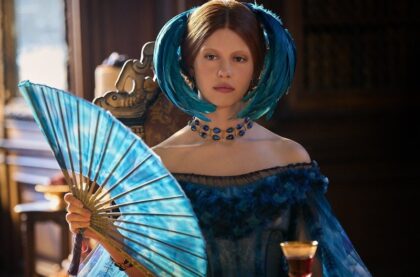
Mia Goth as Elizabeth was an excellent choice. Her character in the film offers a fresh perspective. She is one of the few women featured in the entire movie. I also believe she embodies, at least in some ways, Mary Shelley herself, due to her intelligence, cunning, and no-nonsense attitude. She was a strong woman at a time when women were rarely seen as equals.
Mary Shelley literally broke the mold and brought a gentler tone to the Frankenstein household, but with a slight edge, as Elizabeth could match Victor in wit, intelligence, and stand her ground beautifully. Of course, her costumes were stunning. She wore them so beautifully — from the hats to the dresses, jewelry, wedding gown, and nightgown — everything was gorgeous and fit her perfectly, both physically and metaphorically.

I love how the film is structured, with the first half showing Victor’s point of view and then shifting to the creature’s perspective. We see the world through the creature’s eyes from his awakening and how he navigates the world as a newly born being. Jacob did a fantastic job conveying the creature’s innocence, wonder, compassion, and an almost childlike persona. His interactions with Elizabeth, especially, were terrific, and Mia Goth brought a lightness and love to their interactions. I commend Jacob Elordi for sitting for hours in makeup to achieve the creature’s look. His movements are very much like a dancer’s; you can tell he rehearsed being the creature because it was very fluid, unlike Boris Karloff, who was a bit more clunky and brutish.

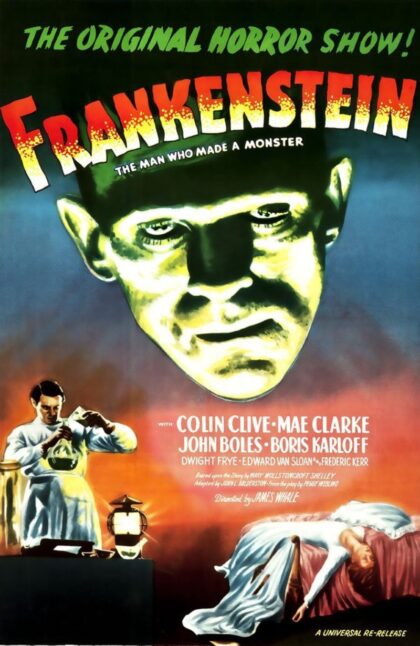
The James Whale directed version of Frankenstein (1931) starring Boris Karloff was, of course, the blueprint for every adaptation that followed. It was very Hollywood and sparked Guillermo’s version. Guillermo fondly remembers how Hollywood monsters, from Boris Karloff to Lon Chaney, influenced his childhood and his view of movies and filmmaking. It’s because of those monsters that we have the brilliant filmmaker we admire today. In this version, you won’t see Victor Frankenstein say, “It’s alive” when the creature finally comes to life. Instead, you’ll see the incredible way the creature is brought to life.
I don’t want to reveal too much about the rest of the film because it’s so visually stunning and beautifully crafted. It’s an incredibly well-written and beautifully acted movie that I want you to experience for yourself, to feel the visceral reactions and emotional responses that many others have shared online. People have been moved to tears or have been thinking about it days after seeing it, and have gone back as many as four times to watch it again because of how powerful it is. The message is impactful, and so are the visuals, showcasing the power of cinema and storytelling. But please also watch the original film because, as someone who loves cinema, you must watch the classics and the works of the masters to understand where that spark or seed originated from. If anybody knows me, they know how committed I am to original content, to watching black-and-white films, and to understanding the foundation of cinema. Because without that, none of what we have today would exist.
I hope you enjoyed my review of Guillermo del Toro’s Frankenstein and that you will watch this masterpiece. If possible, see it on a big screen in a movie theater; if not, enjoy it at home, sitting comfortably on your couch and munching on some popcorn. I also hope you understand how stunning this movie is and that you take to heart the Lord Byron quote shown to us at the end of the film.
 Thanks to Kenn for video and image embedding for my feature article and thank you for visiting WormholeRiders News Agency. I will be back reporting in the future with new analysis about the series we are covering before the next Team WHR adventures at San Diego Comic-Con 2026!
Please feel free to leave a comment here or If you prefer, you may also click the social media icons below to share this news article or as many of our readers and visitors often do, visit me on Twitter by clicking the links or images avatars in this news story.

Until next time,
Regards,